

Introduction
AOL has been part of the internet landscape for decades, and many people still recognize AOL Mail as a familiar email service. An email address that has existed for a long time can sometimes be useful for maintaining an established online identity, keeping older correspondence organized, or continuing to use an address that has been associated with personal or professional contacts for years.
This is why buy aged AOL accounts attract attention. An aged account is generally understood to be an email account that was registered some time ago rather than one that was recently created. However, the age of an account should not be confused with its security, reliability, or legitimacy.
Anyone considering an older email account should look beyond its registration date. Ownership, recovery access, account history, privacy, and current provider requirements all matter. A secure account that is genuinely controlled by its user is usually much more valuable than an older account with an uncertain background.
What Makes an AOL Account “Aged”?
An aged account is simply an account with an older creation history. There is no universal period that automatically makes an account aged, and the term can be used differently by different sellers or users.
The important point is that age is a historical characteristic. It does not automatically indicate that an account has a good reputation or that it will perform better than a newly created account.
For example, an account that has existed for several years but has been inactive for most of that period may have a very different history from an account that has been regularly used for ordinary communication.
Therefore, account age should always be considered alongside other factors.
See also: Essential Features of a High-Quality iPhone
Why Account History Deserves Attention
An email account can develop a substantial history over time. Messages, contacts, subscriptions, recovery methods, and connected services may all become associated with it.
If an account changes hands, the new user may not know everything about its previous use.
That uncertainty can become a problem when the account is connected to important services. A user may discover old recovery details, unfamiliar contacts, or other information that was never expected to be associated with the account.
For this reason, direct ownership from the beginning provides a much clearer and safer account history.
Older Does Not Automatically Mean Better
It is easy to assume that an older account must be more valuable than a new one. In practice, that is not necessarily true.
A newly created account can be perfectly suitable for everyday communication when it is properly secured and managed.
Meanwhile, an old account could have outdated recovery information, weak security, previous unauthorized access, or other complications.
The practical value of an email account comes from its usability and security rather than simply the number of years since registration.
The Importance of Legitimate Ownership
Ownership is one of the most important considerations when dealing with an email account.
When you create an account yourself, you select the credentials and provide the recovery information. You also know how the account has been used.
A third-party account introduces uncertainty because another person created it first. Even if the password is changed later, questions may remain about previous recovery options or access.
For personal and professional email, clear ownership is especially important because an inbox may contain private conversations and sensitive information.
Security Concerns With Pre-Created Accounts
Pre-created accounts can create several security challenges.
The original creator may have retained recovery information. Account credentials may also have been stored elsewhere before being transferred.
There is no simple way for a new user to know who may have previously accessed the account.
If the account is connected to other services, the risks can become even more significant.
Users should therefore be cautious whenever an email account comes from an unknown source.
Recovery Information Matters
Password recovery is often overlooked when people evaluate email accounts.
A secure account should have recovery information controlled by its legitimate owner. If an old phone number or another person’s recovery method remains associated with an account, recovering access could become difficult.
Before relying on an email account for important communication, users should make sure that available recovery options are accurate and accessible.
Keeping recovery information current is one of the simplest ways to reduce future account-access problems.
Creating Your Own AOL Account
For users who simply need an AOL email address, creating one directly is the most straightforward option.
Choose an available address, establish a strong password, and complete any verification requested during registration.
Once the account is active, review the security settings and recovery options.
This approach eliminates many of the uncertainties associated with accounts that have previously belonged to another person.
Building a Useful Email History Naturally
There is no need to artificially create an account history.
An email address naturally becomes established through ordinary use. Sending and receiving legitimate messages, maintaining genuine contacts, organizing correspondence, and using the account for normal communication all contribute to its practical usefulness.
The focus should be on genuine activity rather than trying to manufacture a particular account history.
This approach also makes the account easier to manage over the long term.
AOL for Everyday Personal Communication
An AOL address can serve many ordinary purposes.
It can be used for communicating with family members, friends, organizations, newsletters, service providers, and online platforms that require an email address.
Keeping these messages organized is important. Folders, search tools, filters, and regular inbox maintenance can make a large mailbox much easier to manage.
Users should also periodically review subscriptions and remove unwanted communications.
AOL for Freelancers and Independent Professionals
Freelancers often rely on email to manage client relationships.
A dedicated email account can be used for project discussions, document exchanges, invoices, scheduling, and other professional communication.
Keeping business correspondence separate from personal messages can make daily work more organized.
For a growing business, however, a custom domain email may eventually provide a stronger professional identity and greater administrative control.
Using Email Responsibly
A reliable email account should be used for legitimate communication.
Sending unwanted bulk messages, misleading recipients, impersonating another person, or attempting to avoid provider restrictions can lead to serious account problems.
Businesses involved in email marketing should follow relevant regulations and use appropriate consent-based practices.
Responsible use protects the account and creates a better experience for recipients.
How to Protect an Older Email Account
If you already have an older AOL account that you legitimately own, protecting it should be a priority.
Start by reviewing the password and recovery information. Make sure the credentials are unique and that recovery methods are still accessible.
Check for unfamiliar activity and remove information that is no longer necessary.
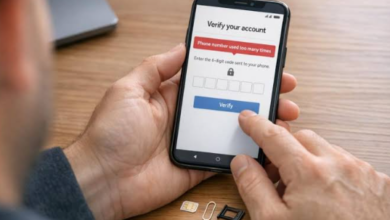
Be particularly careful with unexpected messages asking for passwords, verification codes, or urgent account action.
Avoiding Phishing and Fake Support
Email users are frequently targeted by phishing attempts.
A fraudulent message may imitate a well-known company and ask you to sign in through an attached link.
Instead of trusting the message, visit the provider’s official website independently.
Never disclose your password or verification code to an unknown person.
When something appears suspicious, treating the message cautiously is usually better than responding immediately.
Multiple AOL Accounts for Legitimate Needs
Some users have valid reasons to maintain multiple email addresses.
One address might be reserved for personal communication, another for professional contacts, and another for subscriptions.
Separate accounts can simplify organization and reduce the amount of unnecessary information in a primary inbox.
Each account should still be independently secured. Reusing passwords across multiple accounts can create unnecessary risks.
What to Check Before Using an Older Account
If you legitimately receive control of an older email account, several details deserve attention.
First, verify that you have appropriate ownership and access.
Next, review the password and recovery settings.
Look for unfamiliar contacts, messages, or account activity.
Finally, consider whether the account is appropriate for the purpose you have in mind.
If its history or ownership is unclear, it may be better not to rely on it for sensitive communication.
Common Misconceptions About Aged Accounts
One common misconception is that an older account automatically has a better reputation.
Another is that an account’s age guarantees continued access.
Neither assumption is reliable.
Providers can apply security measures or restrictions based on current activity, account security, and policy compliance. The creation date alone does not guarantee any particular outcome.
Understanding this can help users make more practical decisions about email accounts.
A Better Approach to Long-Term Email Management
Rather than focusing exclusively on obtaining an old account, users should think about building a dependable digital communication system.
Create accounts through legitimate channels.
Keep credentials secure.
Maintain accurate recovery information.
Use separate addresses where there is a genuine organizational reason.
Review security settings periodically.
These habits provide much greater long-term value than simply choosing an account based on its age.
Frequently Asked Questions
What is an aged AOL account?
An aged AOL account is generally an AOL email account that was created some time ago. The term refers primarily to its age and does not guarantee quality or security.
Is an older AOL account better than a new one?
Not necessarily. A new account with strong security and clear ownership can be more useful than an old account with an uncertain history.
What is the biggest concern with a pre-created account?
The main concerns include unclear ownership, unknown account history, recovery information controlled by another person, and potential security exposure.
Can an AOL account be used professionally?
Yes. AOL email can be used for legitimate professional correspondence. Businesses that want a stronger branded identity may also consider a custom-domain email address.
How should an AOL account be secured?
Use a strong unique password, maintain current recovery information, avoid suspicious links, and keep login credentials private.
Does account age guarantee trust?
No. Age is only one characteristic of an account. Security, ownership, history, and responsible use are considerably more important.
Final Thoughts
An aged AOL account may sound attractive because it has existed for a longer period, but age by itself does not make an email account secure or dependable. An older address can be useful when it is legitimately owned, properly maintained, and protected with appropriate security measures.
Users should be particularly careful with accounts obtained from unknown third parties. Unclear history, recovery access, privacy concerns, and previous activity can create problems that are difficult to identify in advance.
For long-term email use, direct ownership remains the strongest foundation. Creating an account through legitimate channels, maintaining secure credentials, protecting recovery information, and using the mailbox responsibly can provide far more practical value than relying on age alone.
A good email account is not defined simply by how long it has existed. Its real value comes from security, ownership, reliability, and responsible everyday use.